The first passive house in the world was built in Darmstadt, Germany, in 1991. Four terraced houses. Annual heating demand of 8.4 kWh per square meter. Around 87 percent less energy than a conventional building of the same size. Germans invented the standard the rest of the world now spends money trying to catch up to. Thirty years later, most of the windows that meet that standard and arrive on US construction sites do not come from Germany.
Where the standard came from
Wolfgang Feist, a physicist, designed the project. He and three other families moved into the buildings in October 1991. The five principles that define the standard: thick insulation, high-performance windows, an airtight building envelope, no thermal bridges, mechanical ventilation with heat recovery. The building has been continuously monitored since completion. It still performs as designed.
In 1996 Feist founded the Passive House Institute in Darmstadt to develop and certify the standard. The word for it in German is Passivhaus. Today the standard is recognized worldwide and applied to hundreds of thousands of buildings across forty-plus countries. The intellectual property is German. The execution has moved.
The original numbers from Darmstadt-Kranichstein, 1991: 8.4 kWh/m² heating demand. 87% reduction versus conventional. Confirmed by continuous monitoring across three decades. The first passive house still works the way the physicist said it would.
How Poland entered the picture
The exact path of how German window manufacturing knowledge crossed into Poland has never been cleanly documented. Various things happened in the 1990s. Polish workers traveled to Germany to staff factory floors. German companies set up subsidiaries and contracted production in Poland to reduce labor costs. Older equipment from German plants found new homes in Polish facilities. The directions ran simultaneously and overlapped.
What you can say with confidence is that by the early 2000s Polish factories had absorbed German window technology, production discipline, and engineering knowledge. The country was also doing something else at the same time. Forty years of communism ended in 1989. The economy reopened. A country that had been compressed by two world wars and then by half a century of state planning crossed the trillion-dollar GDP mark in 2025 and is now ranked among the world's twenty largest economies. That kind of arc requires a particular sort of national temperament.
What that produced
Poland is now one of the largest window and door exporters in the world. The country held the global number one position in 2022 and 2023, with narrow leads over the rest of the field. In 2024 China took the top spot, exporting around 4.8 billion dollars worth of windows and doors, ahead of Poland by roughly 12 percent. The current top tier of the global market is China, Poland, Germany, and Italy. All four compete on similar quality at this point.
German quality remains excellent. Polish quality has converged to the same level on the major performance dimensions: U-factor, airtightness, acoustic insulation, structural integrity. The difference between the two markets is mostly cost structure. Polish labor and overhead are lower. That cost difference flows through to the customer.
This is not theoretical. Polish factories are now supplying serious US projects.
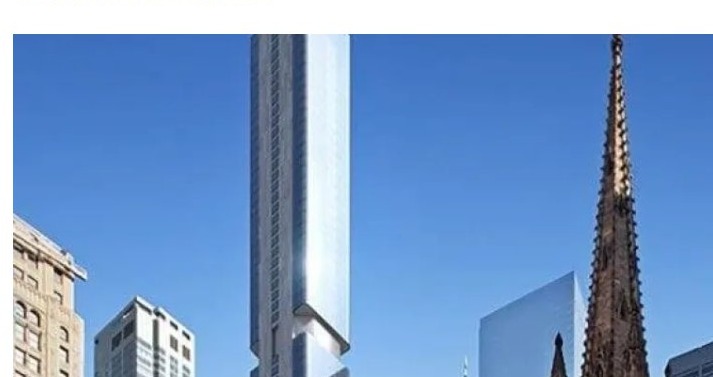
Aluprof, a Polish aluminum systems manufacturer, supplied around 1,000 custom-designed windows for 125 Greenwich Street, a residential tower in Lower Manhattan designed by Rafael Vinoly Architects. The same company also handled the window renovation of the Flatiron Building in 2025. These are not low-end projects taken because nobody else would bid. They are landmark Manhattan buildings selecting a Polish supplier on technical merit.
What this means for an American buyer
Polish factories are now a mainstream choice for European-grade windows in the US, not a budget alternative. When you compare brands, the question worth asking is what you're paying for. German premium brands like Schüco still carry premium pricing. A Polish manufacturer like Aluprof can hit comparable specifications at a notably lower price point. The right answer depends on the specific spec sheet, the certifications you need, and what your inspector will accept.
The point of this article is not to push Polish factories over German ones. The point is that the question does German always mean better deserves a serious answer in 2026, not the reflex it might have deserved in 2006. The technical parity exists. The remaining differences live in branding, distribution, and what kind of relationship the factory will have with you during the project.
The short version
Germans invented the passive house standard. Polish factories learned how to build to it. Then they learned how to build to it at scale. Today both countries compete at the top of the global export rankings, and a few hundred miles between two manufacturers can mean a thirty or forty percent difference in price for the same level of performance. That is how markets work over three decades when one side brings the discipline and the other brings the resourcefulness.