 Most American homeowners I talk to assume the NFRC sticker on a window is a legal requirement. It isn't. The National Fenestration Rating Council is a non-profit. Membership is voluntary. Manufacturers pay annual dues for the right to test their products and apply the label.
So why does it matter? Because US building code references NFRC ratings. The code says windows have to hit a certain U-factor. The inspector looks for the sticker to confirm. No sticker, no rating he can read, so he defaults to a worst-case classification of 0.40. That same window, physically, might be a Polish triple-glazed unit performing at 0.16. Identical product. Half the paperwork. Failing grade.
That's the Ferrari badge problem. The car is still a Ferrari. The inspector just sees a Honda.
Where this came from
Back in the 1970s the US window industry was a mess. Energy crisis, no standards, every manufacturer making up their own performance claims, no way for homeowners to compare anything. The government gave the industry an ultimatum: organize yourselves or we'll do it for you. The result was NFRC. Voluntary, dues-based, industry-led.
That history explains the gap today. NFRC works well for American manufacturers who joined at the start. For a Polish factory, the annual dues and US-spec testing costs are significant, and not every manufacturer chooses to absorb them. A heavy export operation with NFRC certification on every product line doesn't automatically mean better windows or better service. Some of the most careful Polish factories I've worked with treated each US project with real attention precisely because they didn't run a high-volume export pipeline. The window is fine. The sticker just isn't there.
How it plays out
Your local building code might say something like windows in this climate zone must have a U-factor of 0.25 or lower. With an NFRC sticker, the inspector reads the actual number. Polish window with a sticker: 0.15. Passes by a mile. Polish window without a sticker: classified at 0.40 by default. Fails.
The short version: the NFRC sticker doesn't make a window better. It makes the window legible to your inspector. Polish factories without NFRC certification often build better windows than their certified American counterparts.
When this actually matters
Not every project hits this problem. The honest answer for most situations is it depends on your inspector. A few patterns I've seen:
- Large commercial in NY or Chicago Yes, NFRC stickers get checked. So do AAMA structural ratings and acoustic data (OITC, STC). With hundreds of people in the building, inspectors want clean paperwork on every layer of risk. NFRC is just one piece of the file.
- New single-family home in mainstream states Depends entirely on the inspector. The ones who haven't dealt with European windows before are usually the ones asking for stickers. Inspectors who've seen Polish windows know the technology is different from US-standard construction and aren't bothered by a missing NFRC label.
- Retrofit or remodel Often there's no inspector visit at all. Window swap, done.
- Low-density rural areas (Maine, large parts of the Midwest, Appalachia) Often nobody checks. Sparse population per square mile means limited enforcement capacity. Window swap goes in, life continues.
- California (Title 24) Very often required. California has the strictest energy compliance regime in the country. Assume yes.
- Mountain states (Colorado, Utah, Idaho, Montana) Inspectors here have seen Polish windows perform beautifully in their climate and often don't push for NFRC stickers. Worth knowing: modern factories now use an altimeter to charge insulating gas between panes at pressure matched to your elevation. The older method, breather tubes, still appears occasionally but is rare.
What to actually do about it
Talk to your building inspector before you order anything. Better than a phone call: meet in person. Bring the quote from your Polish factory. Bring a window sample if you can. Most factories will ship a corner sample to you for $100 to $300 including freight. It looks like this:
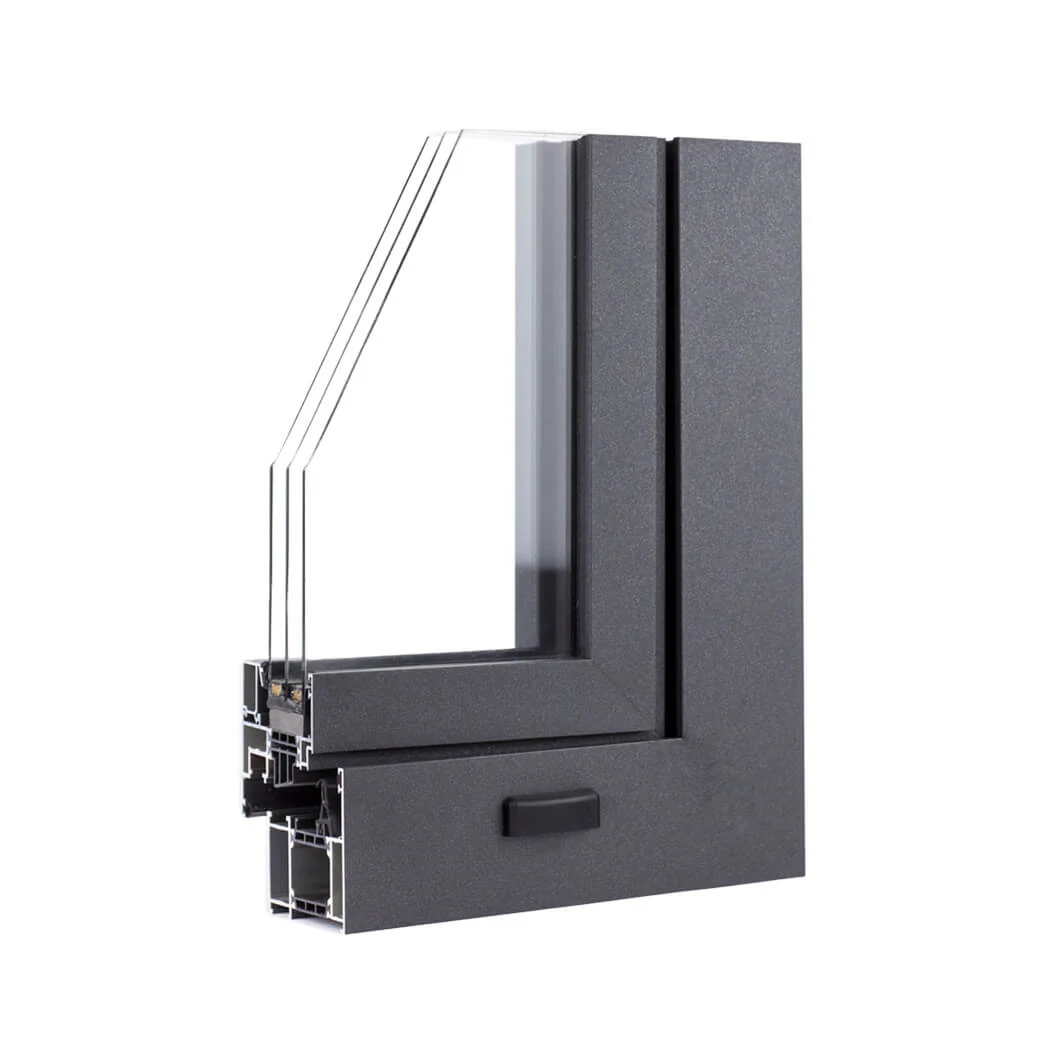
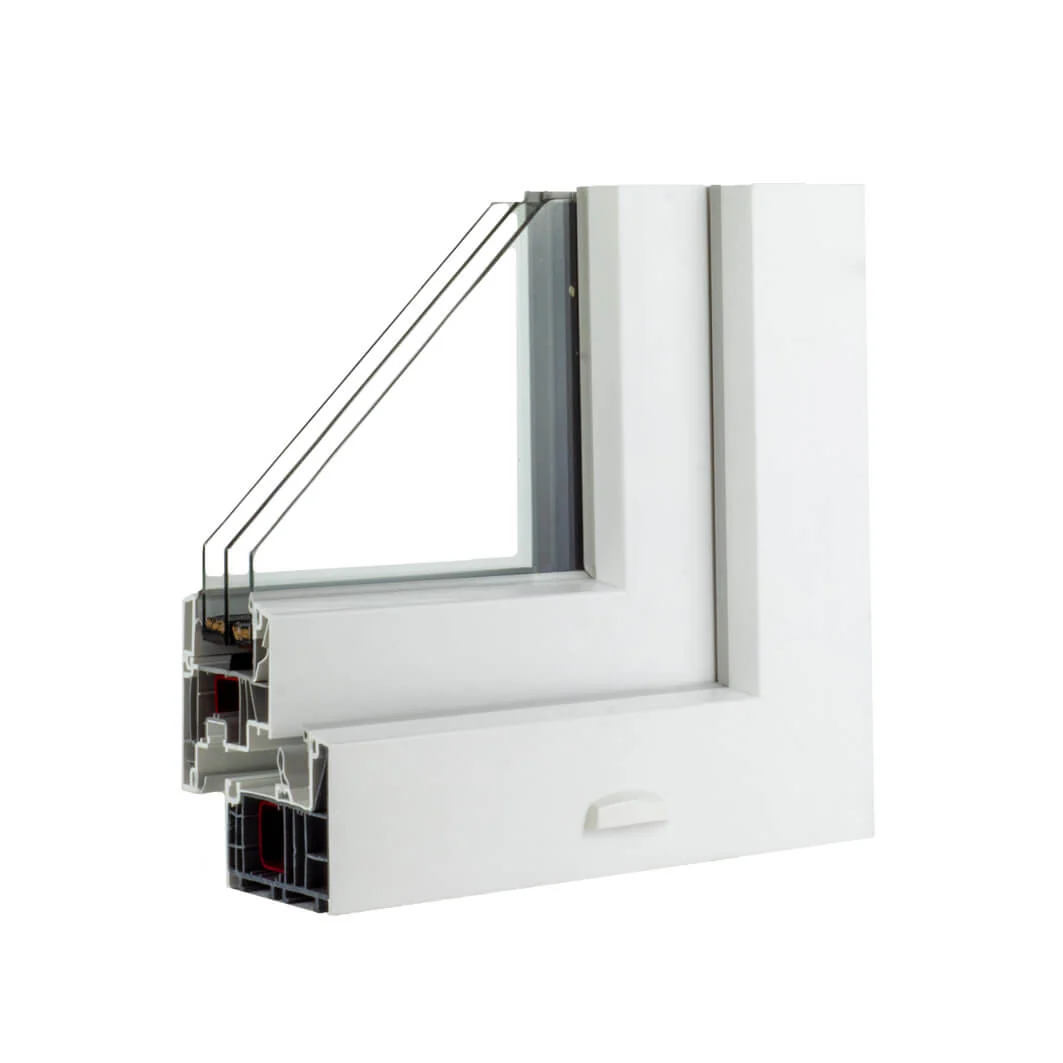
Put that on his desk. Show him the spec sheet. Ask directly: what do you need from me to approve this? Maybe he wants factory documentation translated into US conventions. Maybe a letter from the manufacturer. Maybe nothing, because he's seen Polish windows before and knows they outperform local code by a wide margin. The point is to find out at the start, not after your container is on the water.
One last thing about tax credits
You can sometimes claim a federal energy efficiency tax credit if your windows meet NFRC-certified thresholds. It's real money, but a few hundred dollars a year at most. Don't let it drive your buying decision.
The headline stays the same. Polish windows beat US code by a factor of two. The paperwork hasn't caught up. The gap is closeable with one good conversation before you spend the money.